

Good design doesn’t need to announce itself. You register it instinctively—in the way a room settles around you, in the quiet confidence of materials and colors that feel exactly right, in the sense that every element has been carefully considered without anything feeling overworked. At its best, interior design disguises its own complexity. What is, in reality, a thousand precise decisions reads as seamless, composed and, yes, effortless.
If that process once felt intricate, it now feels exponentially complicated. The digital age has collapsed distance and expanded access, placing an endless archive of interiors at our fingertips. Every aesthetic exists simultaneously: minimalist and maximalist, historic and contemporary, polished and raw. The result is a kind of aesthetic saturation.“Good taste” is no longer fixed, and reference points are as limitless as they’re conflicting.
The real skill these days is knowing how to cut through the noise. Not every house tour seen on Instagram constitutes “good taste,” and not every viral trend deserves to stand the test of time. What we’re seeing, however, is that the most compelling designers of today are moving away from prescriptive ideas of style and toward something more personal, more exacting. The visionaries shaping this moment aren’t offering definitive answers—but asking better questions about how people want to live, what spaces should feel like and how design can reflect something deeper.
We spoke with four legendary designers working at the center of that shift and at the height of their powers. Their work looks nothing alike, but it shares a common rigor: a commitment to interiors that move beyond decoration into something layered, personal, enduring and exciting. In short, they’re genuine American masters.
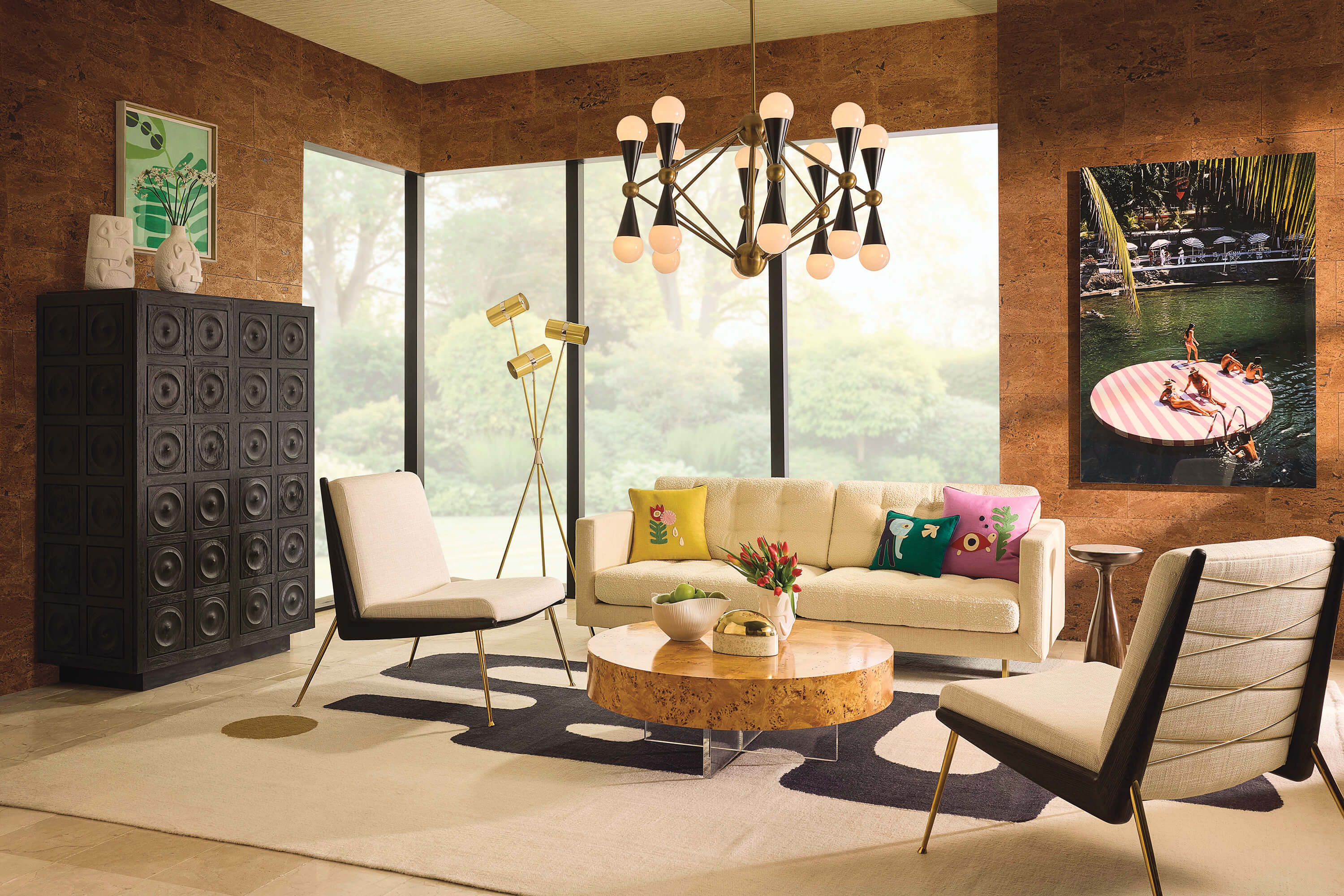
Jonathan Adler THE INSTIGATOR
Jonathan Adler has built his career on the idea that design can be serious without taking itself too seriously. His work—colorful, witty and unmistakably confident—pushes against the notion that good taste must be restrained. “My work has always been about impeccable craftsmanship, timeless elegance and a soupçon of wit and cheekiness,” he says.
The humor is intentional, as is the rigor, and Adler’s foundation as a ceramics artist still shapes his approach. Craft always comes first. The playfulness sits on top of it, giving his work both structure and personality. “I’ve always tried to find a different way of doing something,” he says. That instinct has kept Adler’s work from feeling predictable, even as it has become instantly recognizable.
If Adler feels particularly relevant now, it’s because the design world has finally caught up to the philosophy he’s championed for decades. In his view, the internet has created an aesthetic landscape where style has become a choose-your-own-adventure story. Minimalism and maximalism, traditionalism and futurism, muted palettes and riotous color can all feel contemporary at the same time.
“All trends exist simultaneously now,” says the celebrated New York City-based designer. “It’s everything, everywhere, all at once, and there are no rules.”
For Adler, that collapse of convention is liberating. Earlier generations were typically defined by a dominant visual language; today’s interiors, especially Adler’s, resist categorization altogether. And what excites him about the future of American design is that sense of possibility—that a room can be millennial, ultramodern, cottagecore, glamorous or all four at once. The disappearance of the old design rules, he says, is an invitation to embrace individuality.
The Manhattan resident’s long-held outlook isn’t just coincidence, either: it dates back to his grandmother, whom he describes as a “glamorous eccentric.” Her home was filled with singular objects collected over a lifetime of travel, each carrying its own story. The pieces fascinated Adler as a child and he jokes that, when she died, they practically fought over who would get what.
Asked what he hopes his own legacy will be, Adler doesn’t talk about trends or commercial success. He hopes to inspire the same sense of curiosity and attachment that his grandmother inspired in him: to create objects and interiors that people live with, cherish and will perhaps one day fight over themselves.
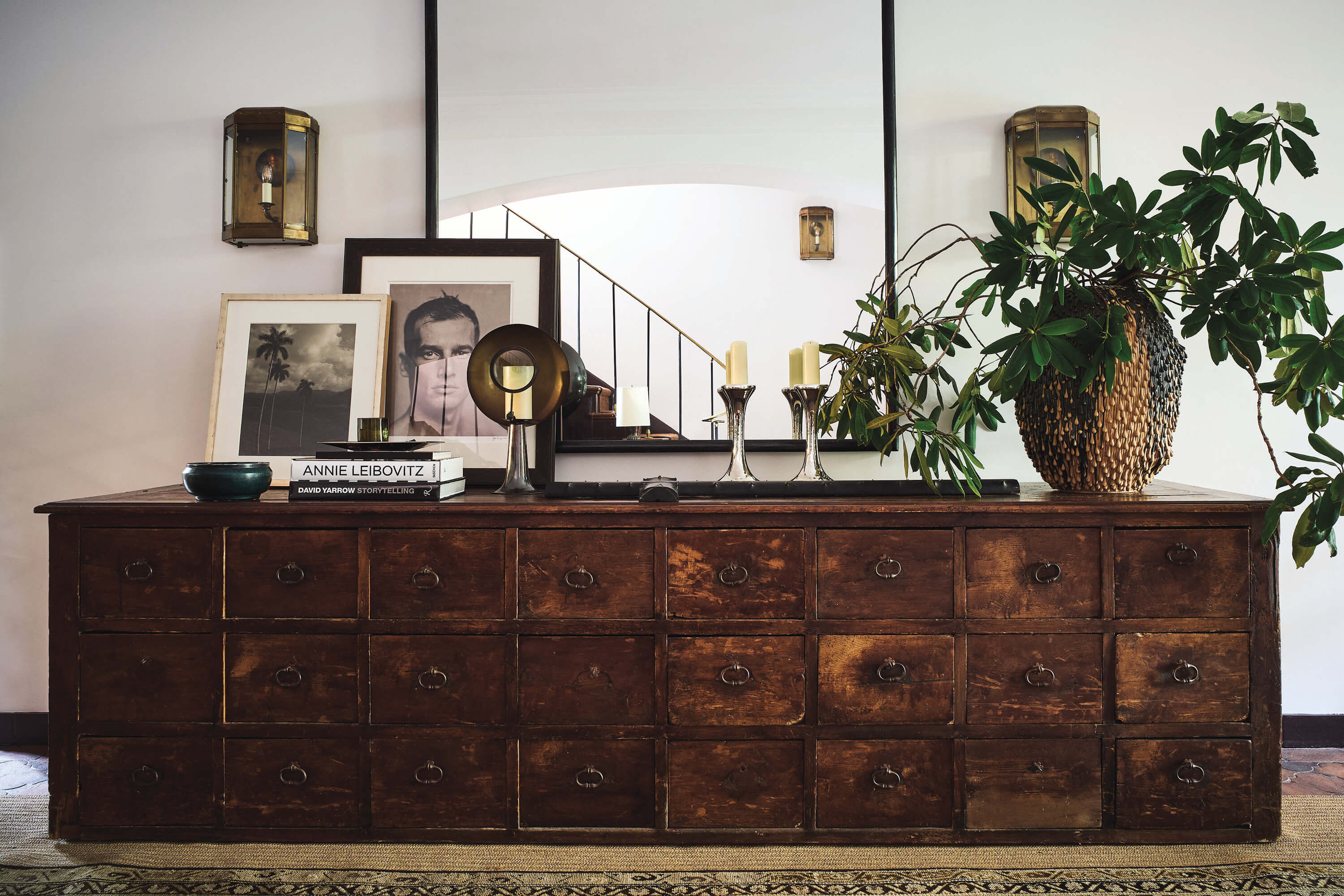
Alfredo Paredes THE DIRECTOR
Alfredo Paredes, named on ELLE Décor ’s A-List 2026, designs with a narrative in mind. Before materials or layouts, there’s a larger question: what’s the story of this place? It’s an approach shaped by his 34 years at Ralph Lauren as head of both Global Store Design and Architecture, where environments were built around a clear, cinematic idea. “Ralph is like a movie director,” Paredes says. “Everything is about a concept.”
That approach still anchors his work. Whether he’s designing a Palm Springs desert getaway, a members club in Newport, RI, or his own stunning home on Shelter Island, NY, the starting point is always the same: Rather than working room by room, he builds a complete vision first. Clients aren’t just reviewing samples; they’re stepping into an idea. Materials are meant to be touched, spaces imagined in motion. Once the concept is clear, everything else falls into place.
“I don’t have a particular look,” the Cuban-American designer says. “My ability is to channel what the client has in their mind and bring it to fruition.”
That distinction is central to Paredes’ practice. Many designers begin with furniture, fabrics or architectural details but Paredes begins with a world. Years spent translating Ralph Lauren’s ideas into immersive environments taught him that clients often know how they want to feel long before they know what they want something to look like.
“People come to me when they’re building their dream houses,” Paredes says. “But they can’t always articulate it.”
Through conversations, storyboards, materials presentations and references, he gradually helps his clients construct that narrative, helping them see not just individual rooms, but the life that will unfold within them. That approach explains why Paredes moves so comfortably between private residence and hospitality projects. In many ways, the private clubs and restaurants now filling his portfolio are a continuation of the work he spent decades refining at Ralph Lauren. This year, his studio is completing groundup residences from New Hampshire’s tony Lake Winnepesaukee to Bedford, NY, alongside projects in the Woolworth Building in Tribeca and a new athletic club in Brooklyn Heights.
But don’t expect Paredes to just copy-paste his Ralph Lauren approach, either. For years, he devoted himself to helping realize someone else’s vision. Now, through his own studio, Paredes is discovering where the Ralph Lauren influence ends and his own voice begins. That voice, it turns out, was not a signature aesthetic, but a way of thinking. Alfredo Paredes isn’t simply designing rooms. He’s helping clients direct the sorts of lives they want to live.
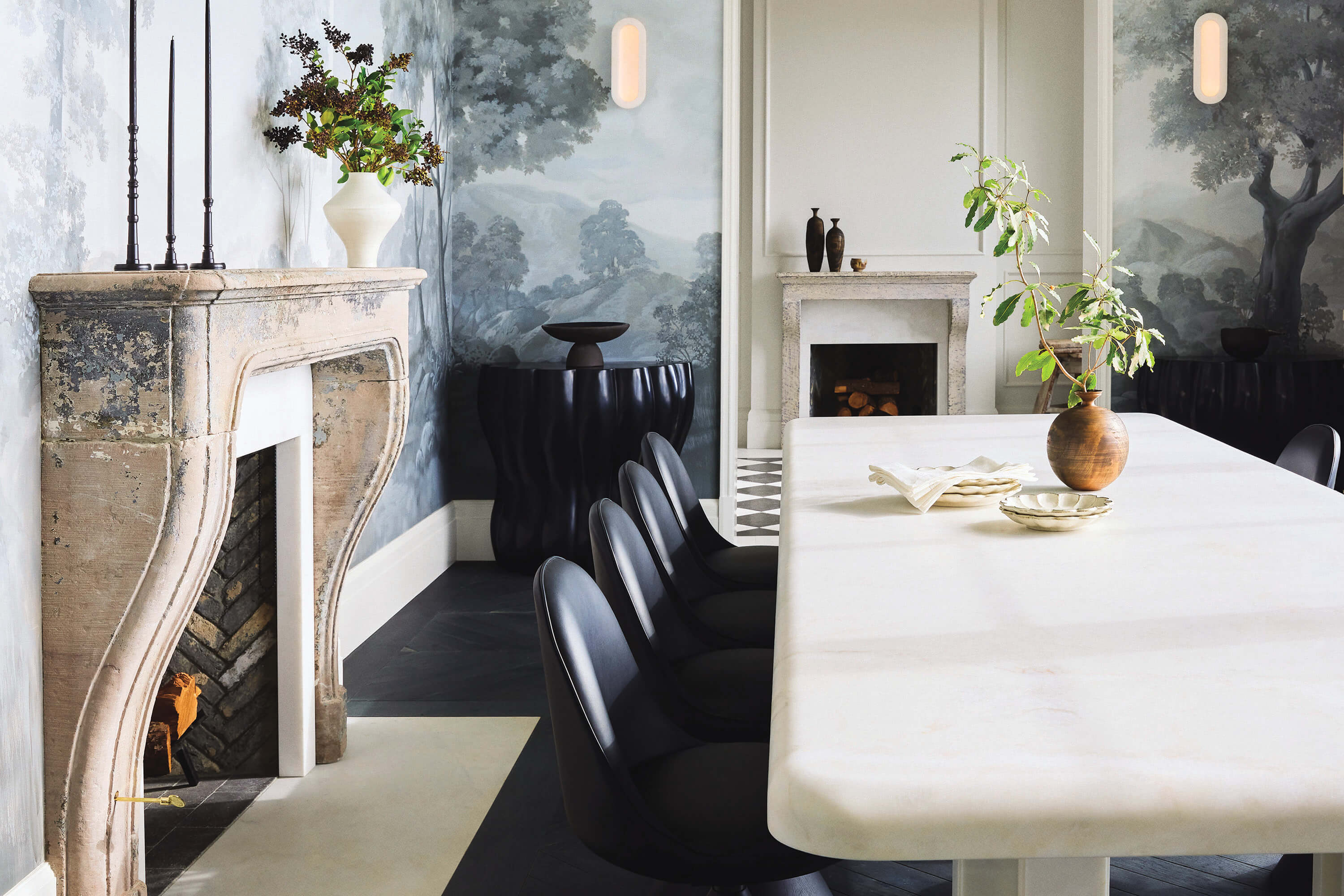
Brigette Romanek THE LISTENER
Brigette Romanek begins with people, not rooms. Her process is fundamentally rooted in observation—how clients live, what they respond to, the details they don’t realize they’re revealing. “I don’t want it to be ‘just a beautiful house’—I want it to be a place people really love and enjoy.”
That distinction defines her work. Romanek’s interiors are polished, but never precious. There’s an ease to them, a sense that they’re meant to be lived in rather than admired from a distance. Her rooms are often bold with color and pattern, deployed with artful intention, crafting joy and soul into daily life without feeling overstimulating. She studies what her clients wear, how they move, what draws their attention. Early on, she writes down what she believes matters most to them, then returns to those notes at the end to see if she was right.
The result is what she calls “the most beautiful version of their diary.” Her spaces feel intimate without being overly revealing, expressive without feeling staged. A recent project in Italy captures that balance, layering contemporary and mid-century elements with custom pieces that feel entirely at home. “I want people to feel like it’s theirs,” she says. In a design landscape that often rewards a recognizable signature, that instinct—to step back just enough—sets her apart.
That gift for creating deeply personal interiors is rooted in her creative, eclectic past. The daughter of singer-songwriter Paulette McWilliams, whose career included collaborations with everyone from Aretha Franklin to Michael Jackson, Romanek spent much of her childhood moving around. Decorating became her way of creating continuity from one home to the next, especially when accompanying her mother on tour. Wherever she landed, she instinctively transformed unfamiliar spaces with treasured objects and keepsakes. Long before her design career, she was already practicing the principle that’s come to define her practice: that a home should reflect the life of the person living in it, not the designer who created it.
Her actual entry into the field arrived almost by accident. Friends became captivated by the storied Laurel Canyon home she shares with husband Mark Romanek and began asking for help with their own spaces. What started as informal requests between friends evolved into one of the most sought-after studios in the country. This year, Romanek Studios was named on the ELLE Décor A-List 2026 in the ultra-exclusive “Legend” category—the highest honor in the publication’s design roster.
In just a few years, Romanek has become the designer of choice for an influential roster that spans Beyoncé, Gwyneth Paltrow and Demi Moore. But the glitz of celebrity names is beside the point. Across projects and personalities, Brigette Romanek returns to the same question: How can a space feel unmistakably like the person who lives there? She, clearly, always has the answer.
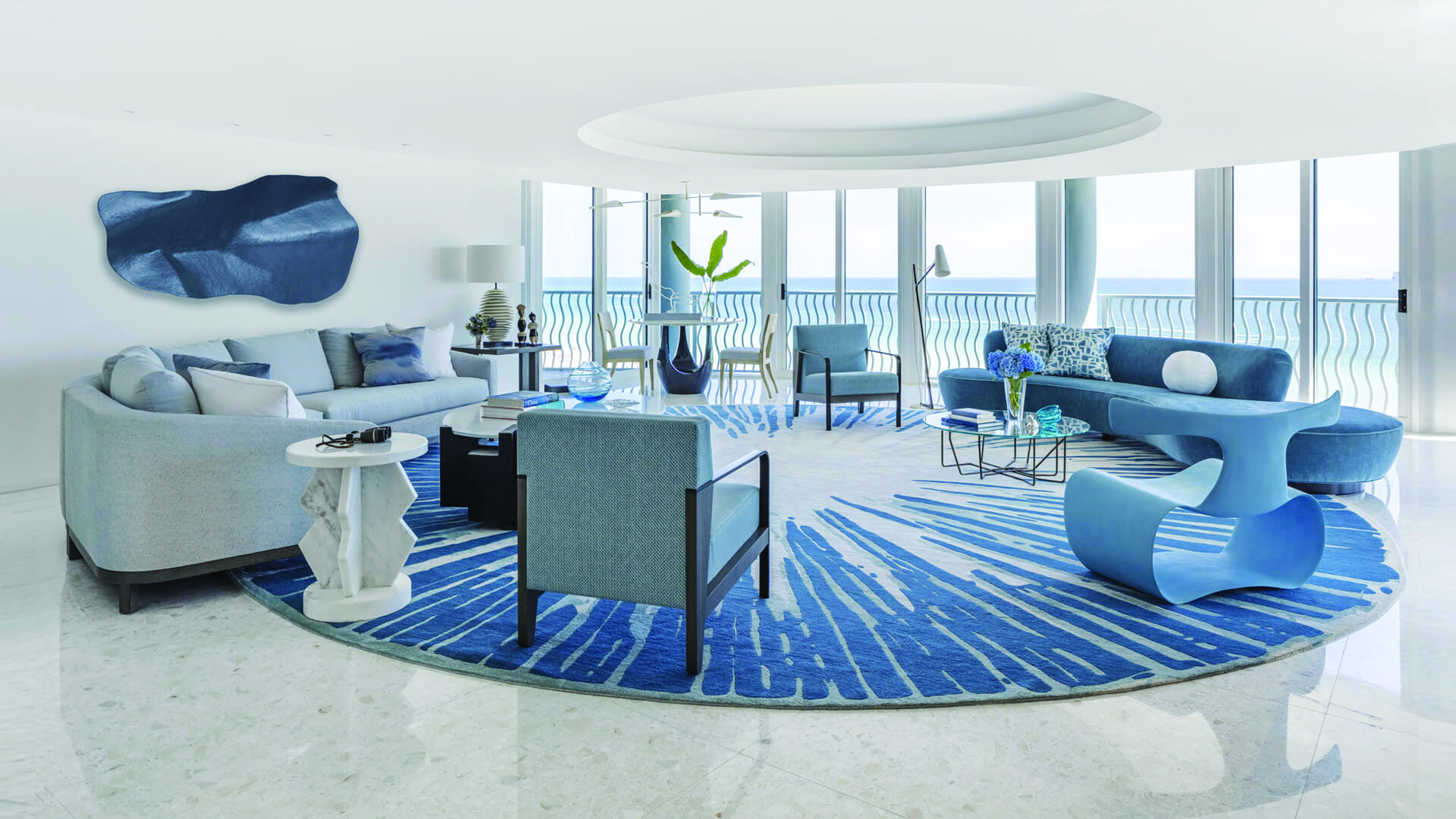
Matthew MacDonald THE ALCHEMIST
Matthew MacDonald’s work rests on a deceptively simple idea: that the most interesting rooms live somewhere in-between. Not fully modern, not entirely traditional, but carefully balanced between the two. He’s refined this aesthetic tension over decades, and one that reads as effortless only because it’s so controlled. His rooms feel airy and light with restrained pops of color. There are rounded corners balancing rigid structure and straight edges commanding boundaries in more nebulous spaces.
“Anyone can mix,” MacDonald says. “But to do that mix well, it takes talent.”
What he’s really describing is discipline. Contemporary pieces sit alongside vintage ones, but nothing feels forced or overly curated. There’s a sense of ease, even when the combinations are unexpected. That balance shifts depending on where the project is.
“A project in Miami has a slickness, a bit of sexiness,” he says, while homes in the Hamptons or the Carolinas move toward something softer, more subdued. He treats geography almost like a collaborator, adjusting tone without losing clarity.
Clients have changed just as much as the landscape. They arrive with references, opinions and a point of view shaped by social media. MacDonald says he never pushes against it so much as refine it.“You have to be gentle,” he says.“It might work where they saw it, but not necessarily where you are.” The work becomes a process of editing, he says, taking a flood of inspiration and shaping it into something that feels grounded and cohesive.
MacDonald’s own path into design began unexpectedly. Originally on a pre-med track, he returned home from college one summer to find his mother renovating the family house. What started as curiosity quickly became obsession. More than three decades later, he’s evolved into a designer responsible for some of the country’s most coveted residences, including projects for global superstar Jennifer Lopez.
What distinguishes MacDonald isn’t a signature look so much as a refusal to rely on one. His projects are shaped as much by their surroundings as by the people who inhabit them. Rather than imposing a formula, he says he allows each project to develop its own identity, drawing from architecture, landscape and the rhythms of everyday life.
In an era when clients arrive armed with endless inspiration from Instagram and Pinterest, MacDonald has also become an editor. He welcomes references—but rarely takes them at face value. A striking detail from one image, a color palette from another, the mood of a third—these fragments become raw material rather than instructions. The challenge is knowing what to leave out. Good design, he says, comes not from accumulating ideas but from refining them, stripping away the unnecessary until a room feels inevitable rather than assembled.
Making sense with a sense of style. Yes, please.