

With his slight build and softly angular features, the guy looks like he might need to be lashed to a mast to survive a stiff wind at sea off the coast of his hometown of Annapolis, MD. But Christian Siriano knows how to weather a storm. While many of his fashion contemporaries who started out in the aughts strewn in more industry cognoscenti luster and handed more crystal awards are now diminished or history, the feisty sprite who won Project Runway ’s fourth season at just 21 years old is still standing tall. Is he ever.
During his season’s run, Siriano became known as much for displaying the fearless confidence of a man twice his shoulder width—with a knack for quotable quips including “Ferocia Coutura”—as for his daring talent. No doubt about it: Christian Siriano remains a formidable and unapologetic showman.
But he’s also proved to be an astute observer and navigator through fashion’s frequently turbulent waters. Even more admirable, he’s that rare talent who doesn’t look over his shoulder at what others are running after, collaborating with brands others pooh poohed to get his name out there, dressing actresses ignored by ateliers in Paris and Milan to generate an entertainment industry wide wave of admiration that attracted the more coveted stars including Zendaya, Jennifer Lopez, Meryl Streep, Angelina Jolie, Celine Dion and one very popular former first lady. And he deserves to be hailed as the Sir Galahad of runway diversity.
This summer, for a sixth consecutive year, Siriano returns for Project Runway ’s Season 22, this time as a mentor. He’s determined to guide contestants not only through the show, but to help set them up for success in the tumultuous fashion industry after the cameras stop rolling.
Siriano is serious, sharp, focused, driven, nobody’s fool, nobody’s tool and the best ally of every woman who wants to feel like the star of her own red carpet (just ask Janelle Monae, who donned custom couture Siriano in a nature-meets-tech inspired ensemble that doubled as performance art at the recent 2026 Met Gala). His designs recall the polish of Charles James, but his focus is pragmatically on staying in business. In boxing, there’s a term for underestimated bantamweight pugilists who know how to “punch above their weight.” What I admire so much is that when it comes to creating glamour, Christian Siriano knows how to deliver a knockout.
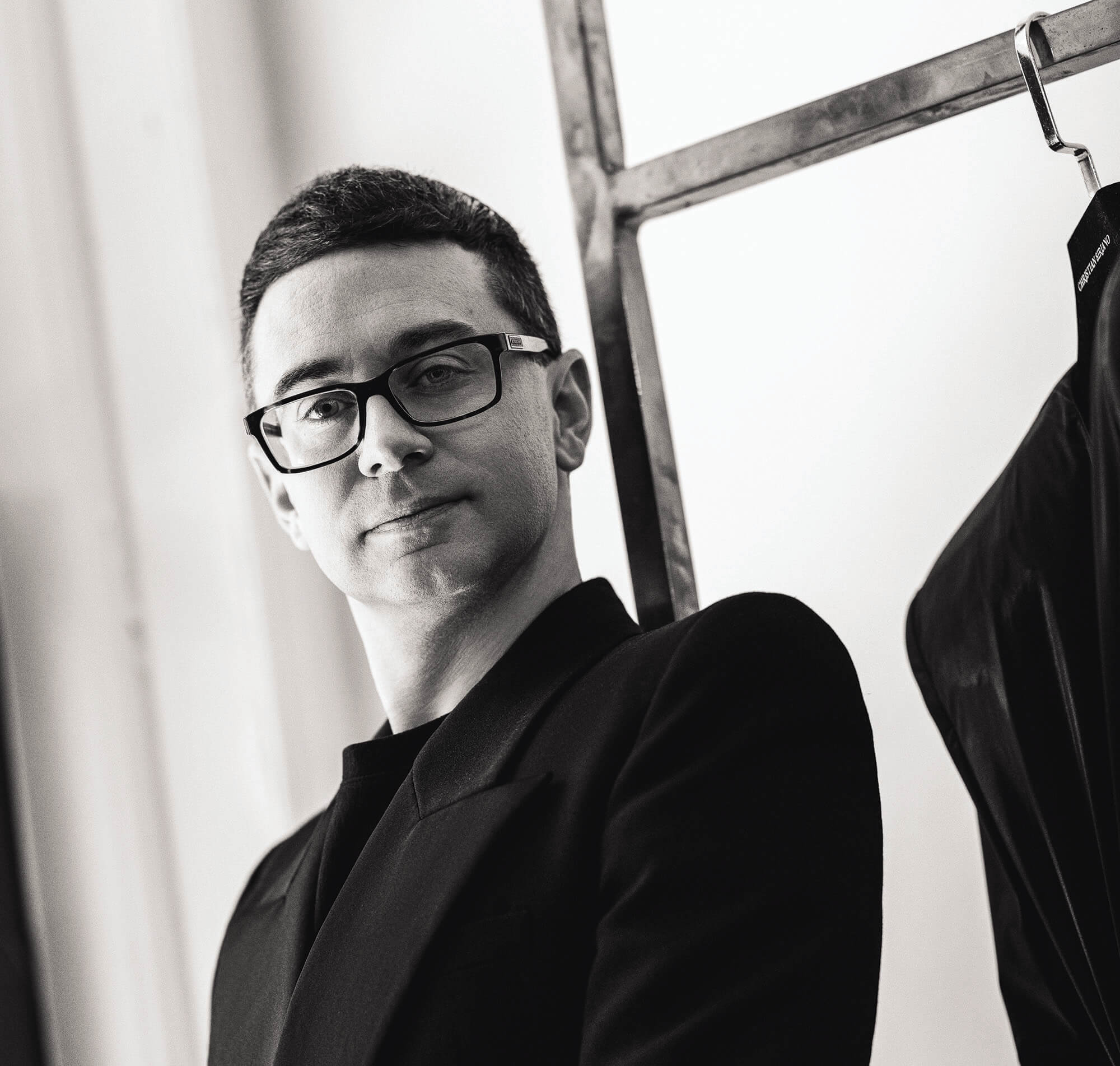
What’s the best part about designing?
Whether it’s a client, bride or red-carpet subject, I love seeing someone come in the showroom in their jeans, put on something I made and watch them transform into a more vibrant version of themselves or sometimes take on a character.
When did you get the itch to design?
When I was growing up. I watched every red-carpet event on TV with my family. Making people look glamourous became my fantasy. I didn’t know anything about fashion and, besides the award shows, I didn’t watch a lot of television. My major reference point, however, was that I was backstage watching every ballet my sister was in (Sharon was a member of The Ballet Theater Of Maryland), I checked out every dyed tulle skirt and embroidered bodice. I stalked the costumers. I became obsessed.
Was there a movie, say, Breakfast At Tiffany’s or The Thomas Crown Affair, to name two that other fashion designers often cite, that served as an inspiration?
Yes. Don’t Tell Mom The Babysitter’s Dead.
Really?
Hear me out. The film came out in 1991. Christina Applegate plays the oldest daughter of a family whose mom leaves mysteriously for the summer, and the babysitter left in charge of them suddenly dies and nobody knows where she stashed the money to take care of the kids. With mom not around, Christina has to get a job, so she gets one at a staid corporate fashion brand, and she turns it into a luxury house. It’s brilliant. [Laughs]
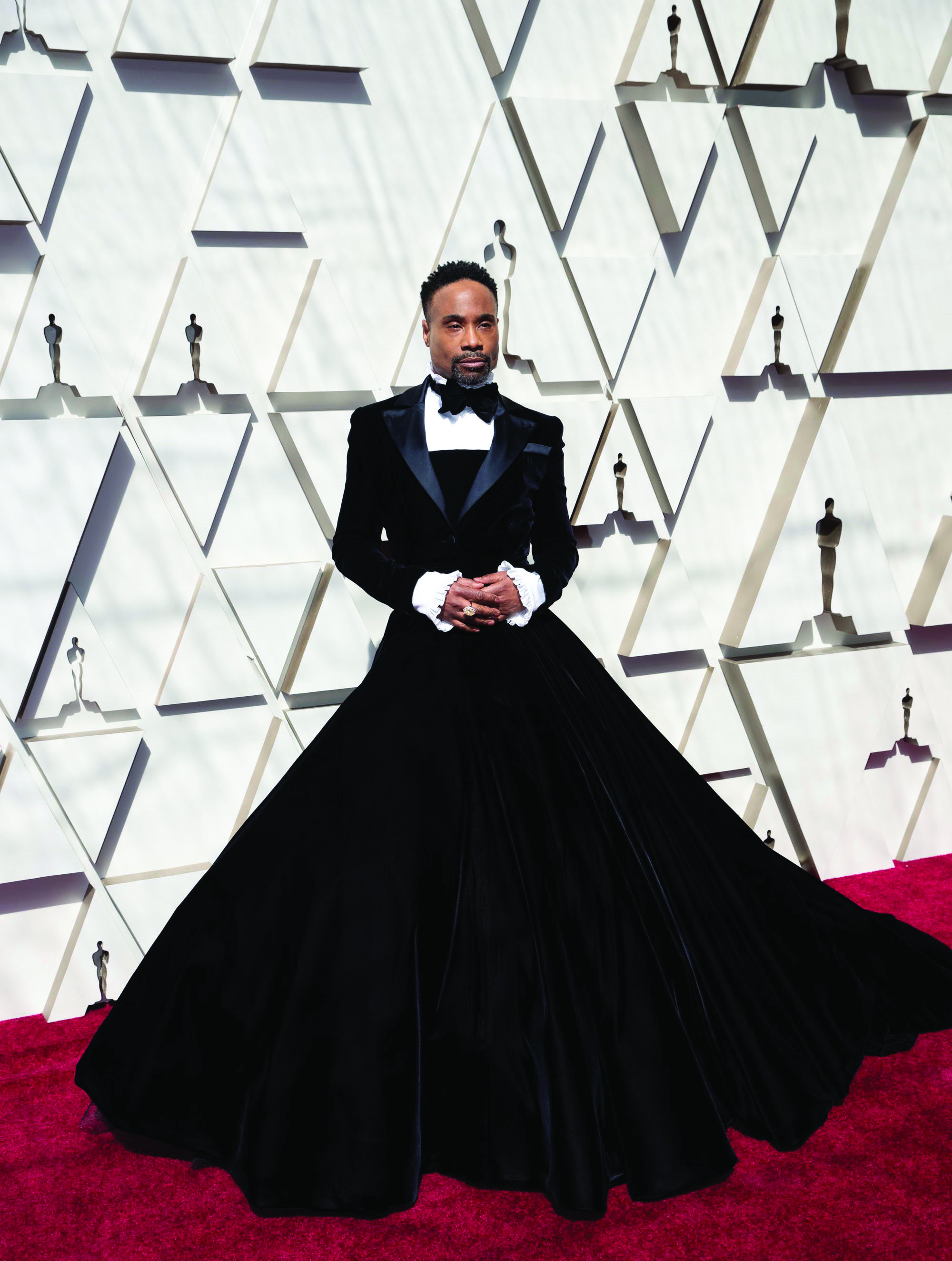
I’ll take your word for it. What made you want to do Project Runway?
I didn’t. I knew nothing about it. I was at school and working in London, so I had never seen the show. My American friends said you should do it. I was 20. I had nothing to lose. So, I took a chance.
You worked for two iconoclastic greats: Alexander McQueen and Vivienne Westwood. What effect did they have on your fashion aesthetic and mission?
McQueen was so creative and hands on. Nothing was ever “No, we can’t do that.” If someone came up with a fresh, unique idea, it was always, “We’ll figure out how to make it happen.” McQueen’s creative mindset was fearless and amazing, and it inspired everyone in his team to think that way. He was so open to collaboration, invention, taking risks and trusting his talent.
What people don’t realize when they look at Westwood’s wild, extravagant designs is that she was a meticulous pattern maker. Those looks weren’t spontaneous. Some of those wild, twisted, voluminous plaids had patterns with 400 elements. Her corsets were the result of 100 pieces. She taught me to leave nothing to chance.
Any idea why you’re the only winner in 21 seasons of Project Runway to create a lasting career of true significance?
I can’t speak for anyone else, but after the show, I became very focused. The show gives you national exposure, but it doesn’t teach you how to build a business. So I approached it very guerilla style. I made sure to always have a new collection ready. To be consistent. I was willing to dress any actress or musician to get my name out there. And to grab the partnerships that came along because I realized very quickly that talent means nothing if you can’t keep the lights on.
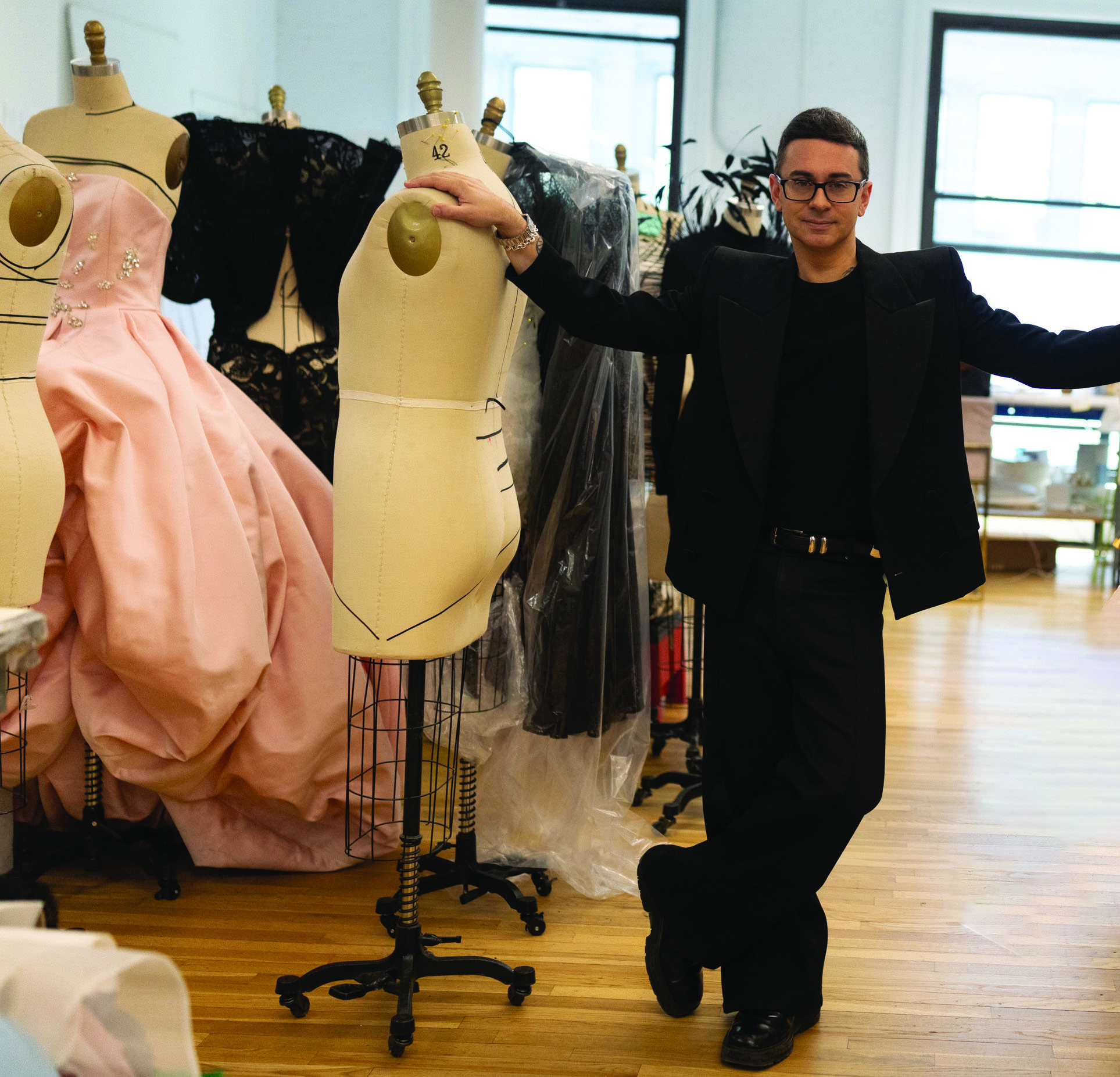
Your first big deal was with Payless Shoes and I remember you getting universally snarked by the selfappointed ready-to-wear gatekeepers.
Yeah. But you know what? I was 22. I had no investors (He still doesn’t). The Runway prize money wasn’t going to last more than a year. And Payless offered me a five-year deal. A billion-dollar company offered to get my name out in a market where millions of people shop. I sold my vibe, not my name. There was never a question about whether I’d take the offer. Plus, I had never designed shoes before, and I loved the challenge.
Anyone who has survived in fashion knows that perseverance is at least as essential as talent. So is luck and fortuitous timing. Proof of that is the way you achieved ‘legitimacy’ in 2016 thanks to two notable women who, oddly enough, you didn’t even pursue.
My first big star may have been Whoopi Goldberg, whom I dressed in 2008 when she hosted the Tony Awards. But recognition kicked in when comedic actor Leslie Jones was set to attend the premiere of 2016’s Ghostbusters, her first major movie, but like most women who aren’t model size, nor as famous as Oprah, she posted online that nobody would dress her. That took a lot of humility to post that publicly. I was a big fan of hers from Saturday Night Live. So I replied online with just a “wave” emoji. She responded, we connected and I dressed her in a custom off-the-shoulder scarlet gown. She looked amazing, just stunning, and she told everybody who put a microphone in front of her what I had done for her.
Two weeks later, you experienced the ultimate ‘pinch me’ moment.
Right? Michelle Obama walked onstage at the Democratic National Convention in a royal blue dress of mine.
That moment shocked 7th Avenue. And suddenly, you’re on a roll. You designed Oprah’s dress for her National Gallery portrait. You became the patron saint of famous curvy women.
I know. It was wild, wasn’t it? Leslie again, Queen Latifah, Melissa McCarthy.
At the 2016 Emmys, you dressed nine actors as diverse as Niecy Nash, Laurie Metcalf, Kathy Bates, Angela Bassett. Your embrace of these women and subsequent inclusion of models of all shapes forced more prominent designers into following your lead.
I’m proud to be known as an American designer that celebrates all women. I found that dressing a lot of fabulous ladies who weren’t a size 0, 2 or 4, but more like 12, 14 and 20, proved what I always thought, that great style is more than just wearing a pretty dress. Great style is when you offer a woman the opportunity to feel confident about herself.
You have a fairly unconventional business structure. Your staff is small. You have no CFO. Your clothes are all made in your New York City studio, not overseas. You don’t spend money on advertising. Accessories don’t drive your business like most ready-towear brands. And your prices aren’t stratospherically out of reach. You don’t even rely all that much on major retailers. And yet here you are, two decades later, unlike many of your contemporaries, still in business, more well known than ever. How?
I sell to women from all walks of life and ages, mostly some form of occasion dressing, mainly in the US, but we’re in other parts of the world, including the Middle East, though that’s taken a huge hit recently. We’re also building our custom suit business. Who doesn’t need a great jacket?
I had a CFO for 16 years. Now I run the company with a lawyer and an accounting firm. I took out some middlemen I didn’t need right now. My smartest decision was to stop selling to most department stores prior to the pandemic. Many weren’t paying and I started noticing I didn’t need the retailer. I still work with Nordstrom and Macy’s, but by taking my business privately, working directly with clients, I wasn’t overproducing. When I do runway shows, I don’t send out conceptual clothes just to get posted on social media. I don’t do shows for critics. I do shows to sell clothes to customers. If I show it, someone can buy it.
Do you think we’re living in a challenging time for American fashion?
We’re in a very transitional period. I think it’s good to see so many new American brands. But we don’t have as much support as European labels. CFDA and Vogue do what they can but it’s not enough. Fashion has gotten so commercialized, driven by accessories, bottom lines and the insistence that everything be global. I think too many people who love fashion can no longer afford designer labels. It’s all so expensive. For example, leather goods have gone insane. Nobody should be spending five or ten thousand dollars on a leather jacket. They just don’t cost that much to make.
To be a respected American brand, you need longevity. A lot of the American designers are having a hard time. When you think about modern American fashion, the first big wave was led by Calvin [Klein], Donna [Karan] and Ralph [Lauren]. Then came another surge led by designers Michael Kors, Marc Jacobs and Vera Wang. But what happened to the next contingent? Talented young designers such as Thakoon, Prabal Gurung, Adam Lippes and Jason Wu couldn’t seem to sustain it. Department stores haven’t helped. No one can build a successful business with a 40 percent margin. So many of them have cut back or stopped doing shows. Also, the shows in New York City used to be centralized.
Everyone knew when it was Fashion Week. It was easy to get noticed. But the Bryant Park tents are gone; Lincoln Center gone. We don’t even have Spring Street Studios. Now the shows are scattered and lacking focus. Renting venues has gotten too expensive. I spent $40,000 of my Runway prize money (Siriano received $100k when he won), just on my first show in 2004. Now it costs $50k just to rent a space for two days. Young designers have gotten savvier digitally, so they can go to market quickly, but there’s no guidance to help them build a brand.
Is that your mission on Project Runway?
Helping the contestants achieve their designs matters. But to me it’s more important to teach them how to stay in business. After the show’s over, what exactly is your plan to survive?
How did you manage to survive 20 years?
To be honest, after I won Runway, I had no idea. But I knew it wasn’t enough to be talented. Luckily, early on, I had a manager, Maria Chase, who had been in the business a long time, had companies, sold them, was instrumental in building Roger Vivier. I give her a lot of credit. As my years went on, I started listening to my publicist, Bianca Bianconi. She’s been my redcarpet maven for 17 years. But more than anything, I believe my success is mainly due to listening to my clients. My shows aren’t filled with influencers. My audience is made up of people shopping. It’s great exposure to do custom gowns for the Met Gala. I’ve done 12 of them. But what really matters is paying less attention to buzzy trends and more attention to what people want to buy.
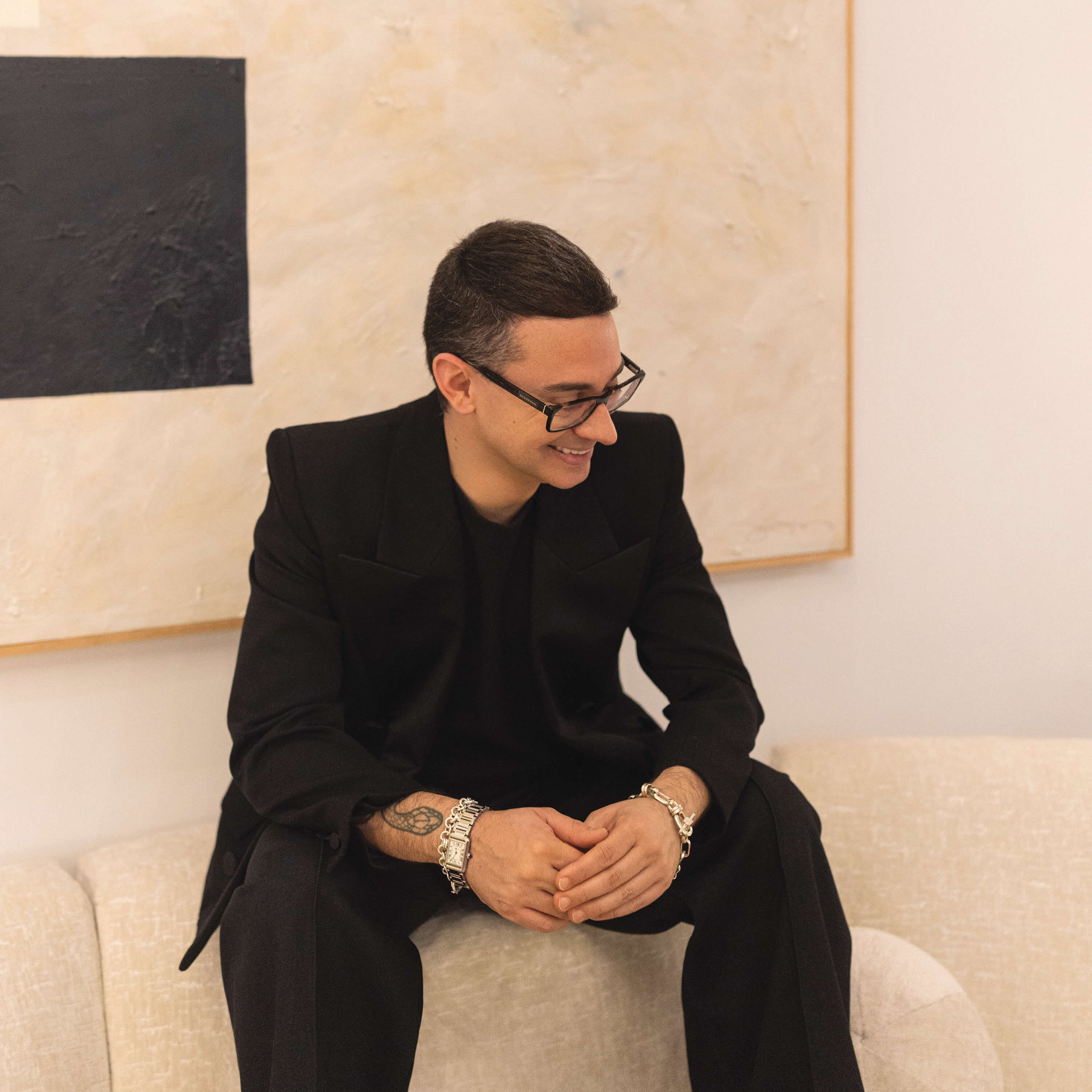
Do you ever just turn it off and do something else. Like go fishing?
Look, I love to work. I love what I do. But I have a great home in Connecticut. Of course, that meant I started to design furniture because I know the furniture that makes me feel comfortable. And I got an apartment in Paris in the 8th arrondisement. It’s probably the one place I come close to doing nothing but walk and eat. But it’s Paris! So fashion is never that out of reach. However, I’ve started painting and the more I do it the more I love it.
Painting? So, is this an exclusive? Is painting the next step in the evolution of Christian Siriano, fashion superstar?
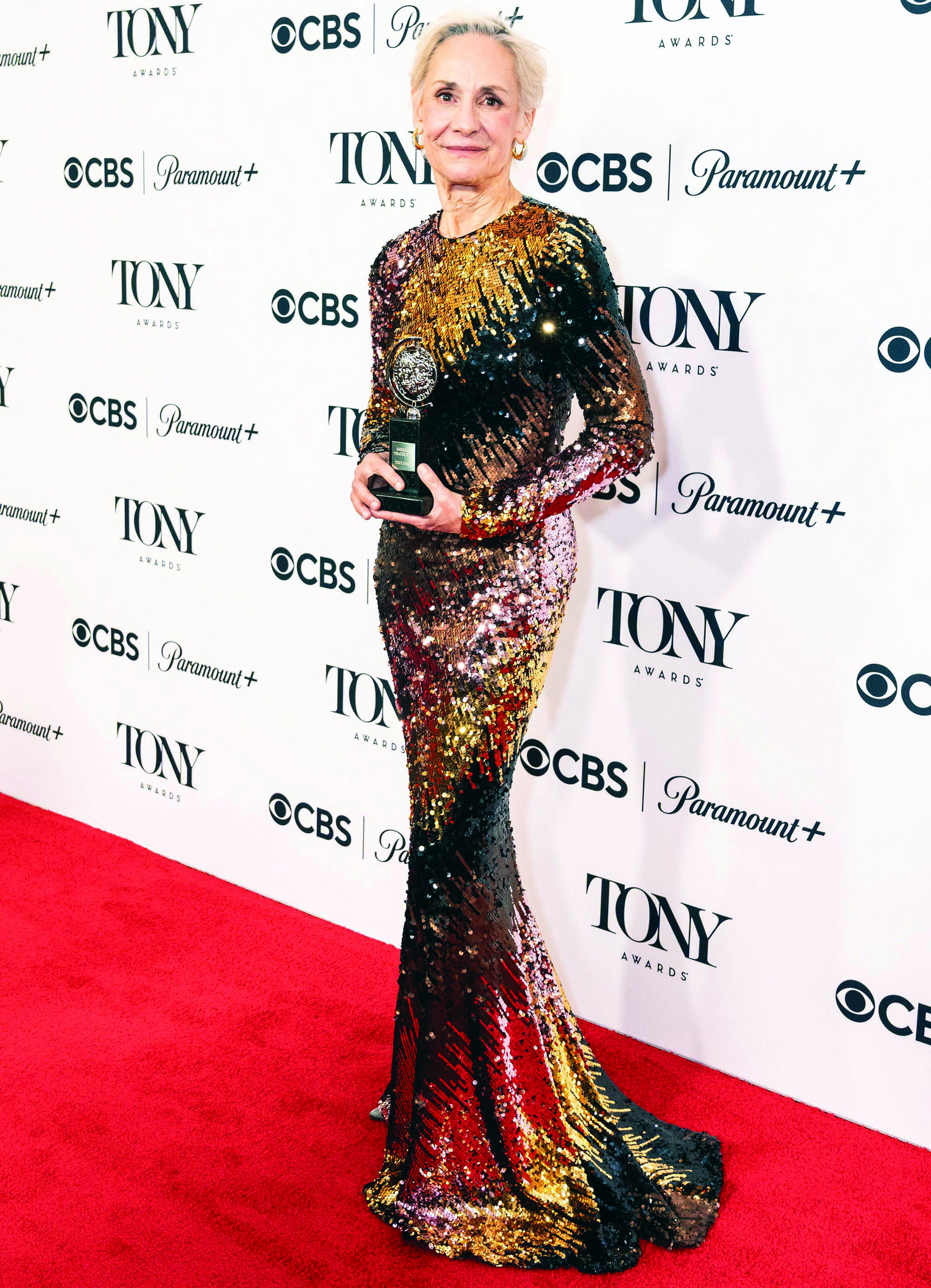
I don’t know. [Pause ] There’s something so pure about art. Fashion is art that has to function. People get to live with what I do. But painting doesn’t have the same purpose. It doesn’t need to function. It’s complete on its own. Being able to paint full time might be the ultimate fantasy, and there are times I wish I could do just that. But then I’d have no money. And I would hate that. So we’ll see how it goes. Meanwhile, I have to race uptown to meet with Laurie Metcalf because I’m dressing her for the Tonys.