
Scroll architecture Instagram for ten minutes and you’ll see Gaudí- on-mushrooms cathedrals, cities suspended in clouds, houses carved into single boulders. The Hassan Ragabs and Midjourney auteurs of the world have built enormous followings on AI-generated structures that will never, in any meaningful sense, exist. The genre even has a name now: paper architecture, updated for the diffusion-model era, a riff on the long tradition of architects who built reputations on work that was never meant to leave the grid. It’s produced some of the most viral design imagery of the last three years and yes, most of it is indeed fantasy that’s beautiful, provocative, occasionally sublime fantasy—but always fantasy.
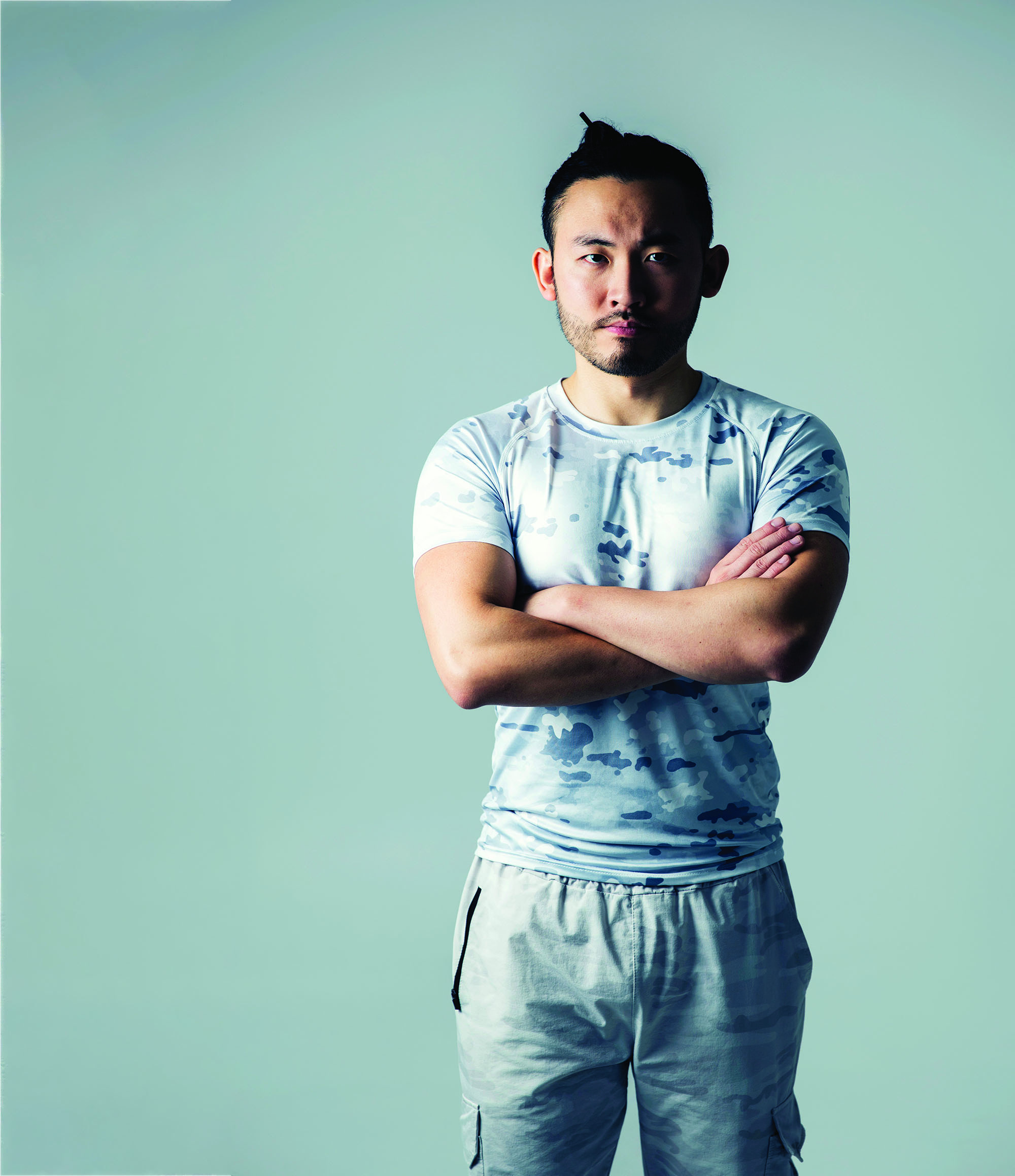
Tim Fu’s work sits in a different lane. His London HQ, Studio Tim Fu, is one of a small number of practices using the same generative tools to actually build things: a federally approved chocolate factory expansion in Switzerland; a 70-villa hospitality development on the coast of the Dominican Republic; a hospitality estate on Lake Bled in Slovenia; master plans and speculative urban research for cities of the future. He’s a Zaha Hadid (iconic late “starquitect”) alum who left to start something leaner and more radical, and his studio of ten—three of whom are dedicated to a self-funded research wing—is producing work at a scale that would have required a firm of 50 a decade ago. The studio’s stated mission is to bridge human and machine creativity, championing human artistry in an era increasingly shaped by artificial intelligence.
I came to understand my own version of Fu’s work by happenstance. Last summer, my husband and I were envisioning the landscaping at our country home in the Catskills. We’d hired a great landscape architect but neither of us could quite picture what we were committing to, a huge problem for any slightly neurotic, aesthetic-driven couple. Boulder placements, hardscape transitions, where a shrub line would sit relative to the house all started to feel overwhelming. So we turned to AI for help and started feeding photos of the house into ChatGPT and Gemini, layering in proposed plant materials and stone, generating and then refining dozens of versions. It turned into a parttime passion project, none of it replacing our designer’s expertise, but instead, enhancing it. Ultimately, the process let us walk into our next meeting knowing what we wanted, what we didn’t and which of his ideas we’d been quietly worried about. The renderings weren’t the design, but instead, they became a language in which we all could communicate.
Which, it turns out, is exactly the shift Fu has built a practice around, just at a vastly more sophisticated scale.
“Day one, we can already generate a lot of the early concept visuals and ideas to a high degree of accuracy,” Fu tells me. “If we get a project, we’ll do a massing model very quickly on site, sketch over our models and produce AI-supported, detailed visuals with enough control of accuracy and context—exposure requirements, all of it—to get our ideas across on day one in high quantity. That is the fundamental shift.”
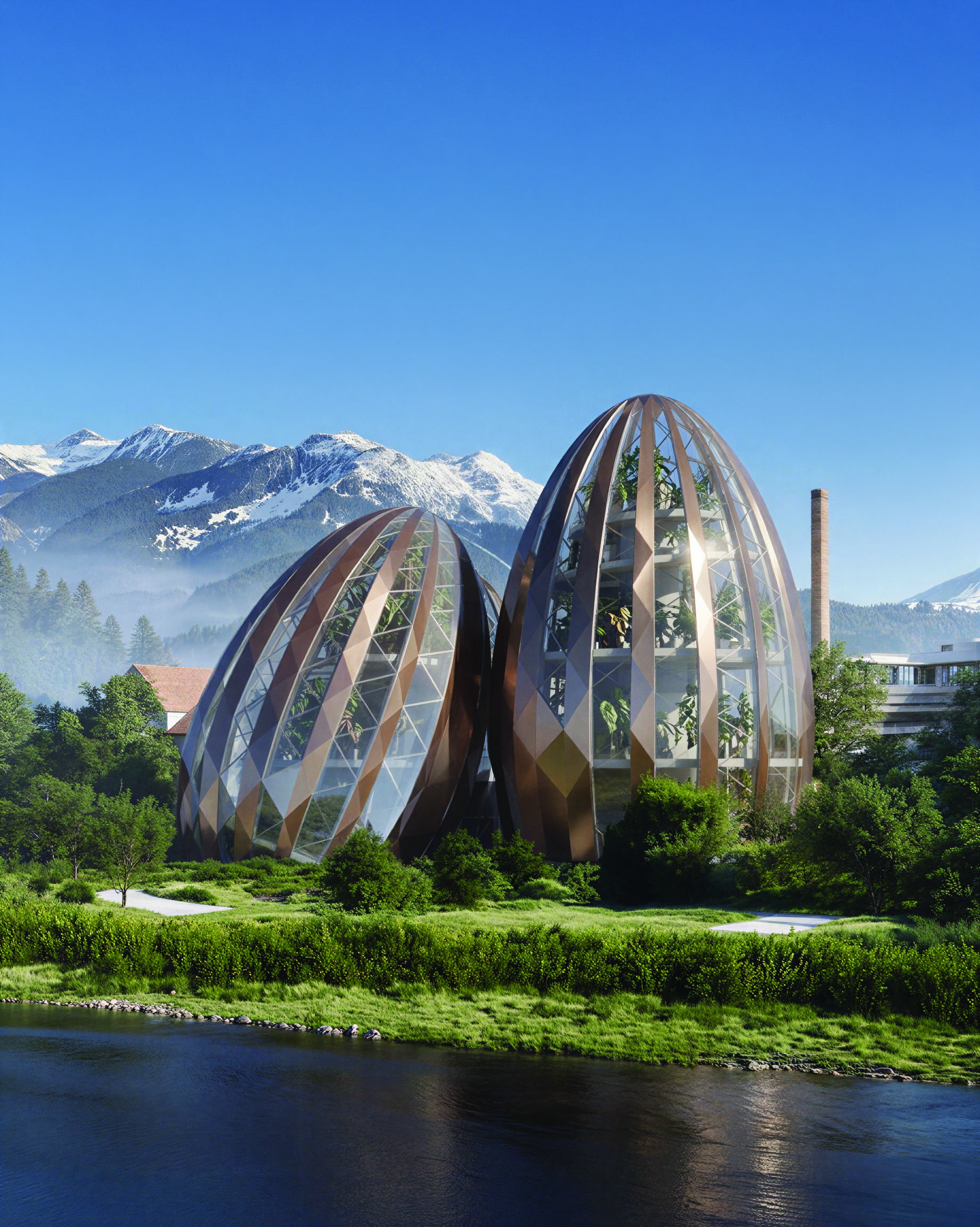
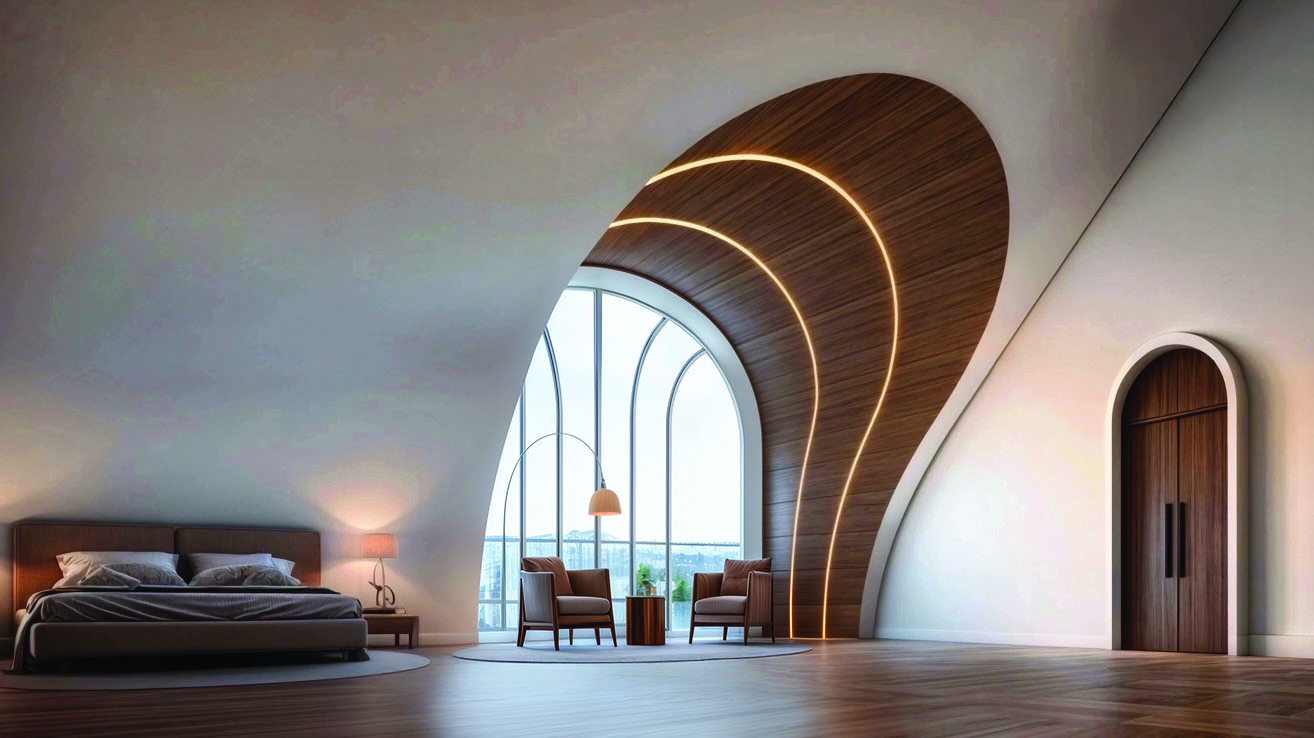
The studio’s current marquee project is the Serre de Cacao, or Cacao Greenhouse, a centerpiece of the new Parc du Chocolat Cailler in Broc, Switzerland. Cailler, the originator of milk chocolate, a Nestlé heritage brand and effectively the birthplace of an entire national industry, is redeveloping its visitor experience around the history of cacao cultivation and Swiss chocolate craftsmanship. Studio Tim Fu led the design of the Serre, an immersive greenhouse pavilion shaped, with cheerful literalism, like a cacao bean.Fu told me they’re aiming to grow annual visitors from 500,000 to a million and the project just cleared its public inquiry phase earlier this spring.
“We literally came in with the idea, let’s put a cacao bean as a building,” Fu said. “Very bluntly: just prompt it out and see what it gives us. Start applying materials to it, put it in the right context, and then we start to get inspiration from the output of the AI and go from there."
That openness and willingness to let the machine throw something onto the table before the architect imposes a thesis is what separates Fu from both his old employer and the Instagram fantasists. At Zaha Hadid, he says, AI was additive: a suggestion engine bolted onto an existing process. The Midjourney crowd, conversely, lets the AI do everything and never has to defend any of its work to a structural engineer. Fu’s studio sits somewhere in the middle, where the tools generate and the architects vet every decision.
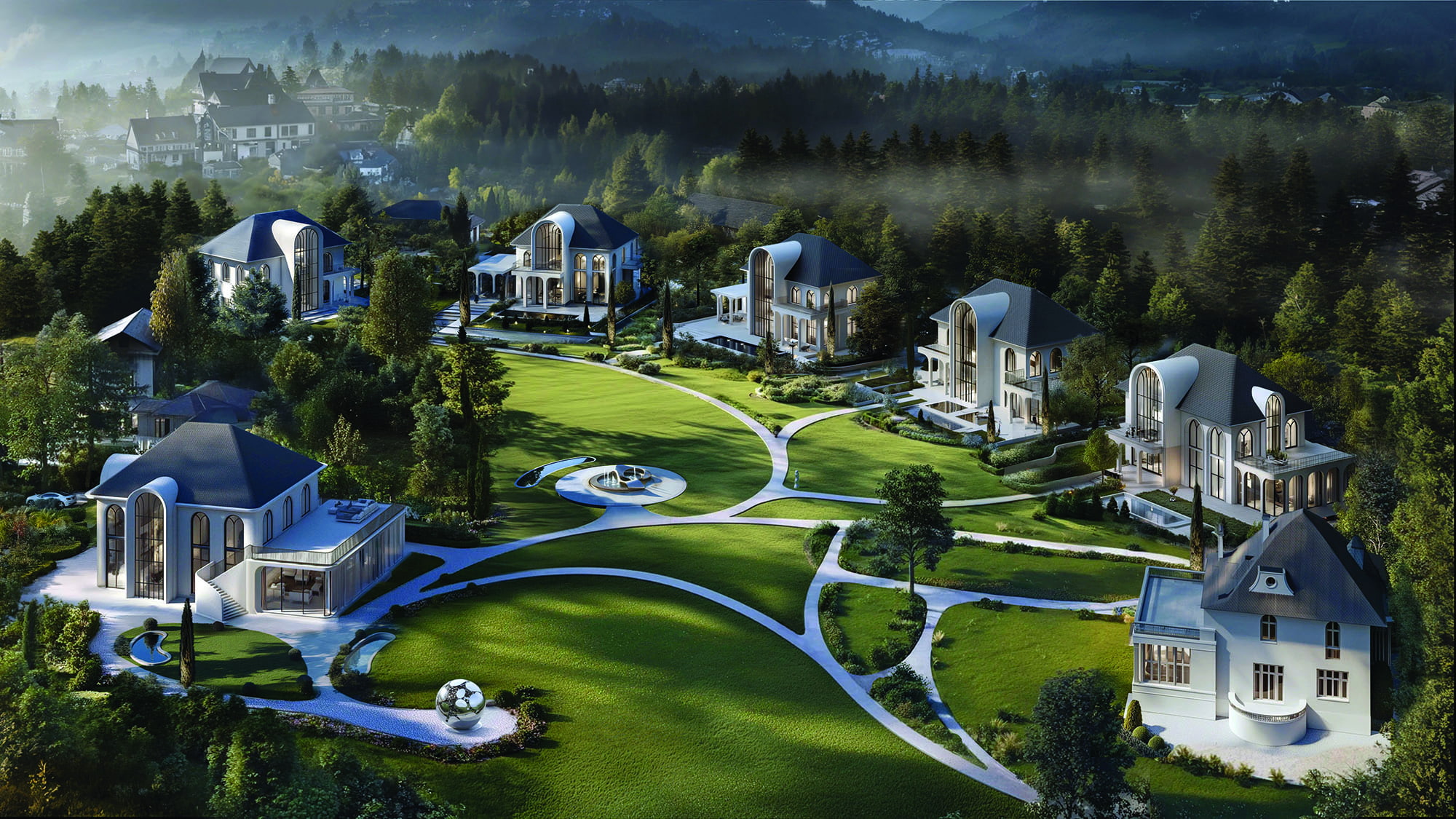
The same approach is now being used on the Domincan Republic’s Secret Samaná. Studio Tim Fu is leading the architectural development, bespoke interior design and overall visual identity, a wider scope than Cailler and the clearest test yet of whether a methodology that produced one iconic building can hold up across the entire 70-villa master-planned environment.
But, it hasn’t always been a smooth handoff, though. A few years back, the studio’s Lake Bled estate, a hospitality project in Slovenia that brought the firm international attention, produced enough friction with the local architecture team that the client briefly removed them from the project. “They didn’t understand how we were going to do any of this design,” Fu said. “Balustrades at the wrong heights, details that were structurally questionable. From a traditional practice point of view, they didn’t understand how we were working.” Studio Tim Fu finished the package alone, then walked the local architect through it in a board meeting. “He said, ‘Congratulations, you guys changed my mind. I thought it was going to be worse.’”
The lesson, Fu told me, is that traditional architects mistake an AI-generated render for a finished proposal rather than a sketch. Treat it as a sketch that’s fuzzy, approximate, refinable; suddenly the workflow makes sense.
That diffusion-model logic, start fuzzy and refine toward specificity, has become Fu’s entire design philosophy. “We use the word vibe a lot in this office,” he says. “We look at people, general massing; shape and things just get more and more high-resolution as we detail with more accuracy, with specific catalog, with exact dimensions.” It’s a near-perfect inversion of how architects have been trained for a century, and it’s the part Fu thinks will, eventually, eat the industry. “I don’t see why this wouldn’t apply to every design field such as fashion design and film.
As we near the end of our revealing conversation, I ask Fu how he thinks about agency in all this and whether he ever worries about ceding too much to the machine.
“I started this process being very intentional about controlling the AI,” the creative visionary says candidly. “And as I developed, I realized you’ve got to let go of the agency. You’ve got to let AI do its own thing, be creative and accept that if the results come up positive, you should take the creative suggestions from the AI, and not the other way around.”
What I kept thinking about, the longer we talked, was my own industry. Publishing has spent the last couple years cycling through every available shade of doom about AI: the writers it’s coming for, the bylines it’ll erase, the slow strangling of a time-honored craft. And while there’s legitimate cause for concern, listening to Fu describe a practice where AI surfaces ten ideas a minute and the architects vet every one of them, the picture started to look less like replacement and more like the same dynamic I’d stumbled into with my landscaping project. The tools weren’t doing the creative work. They were giving us a faster, more vivid language to do it in.
I now fully see how AI could enhance, not replace, my own process, and how the same might be true, eventually, across the rooms of writers and editors I work in. The doom-andgloom version of this story has been written a hundred times. The version where the tools sharpen the work rather than erase it has barely been written at all. Fu, building actual buildings with the same software flooding everyone else’s fantastical feeds, is proof that the latter scenario is the more honest and hopeful story after all. Nothing artificial about that intelligence, if I do say so myself.