

Read the full exclusive interview in Coldwell Magazine
View IssueThough I’ve never been one of those food critics compelled to show up at a restaurant in a costume to rival Mrs. Doubtfire, I agree it’s beneficial for a reviewer to maintain anonymity. So, when I was escorted to my table on the cozy second floor of JoJo soon after its opening in 1991, there was no special fuss. No one there seemed to know I was the restaurant critic for Interview magazine. I was simply one more obsessed foodie curious about the new restaurant’s young chef.
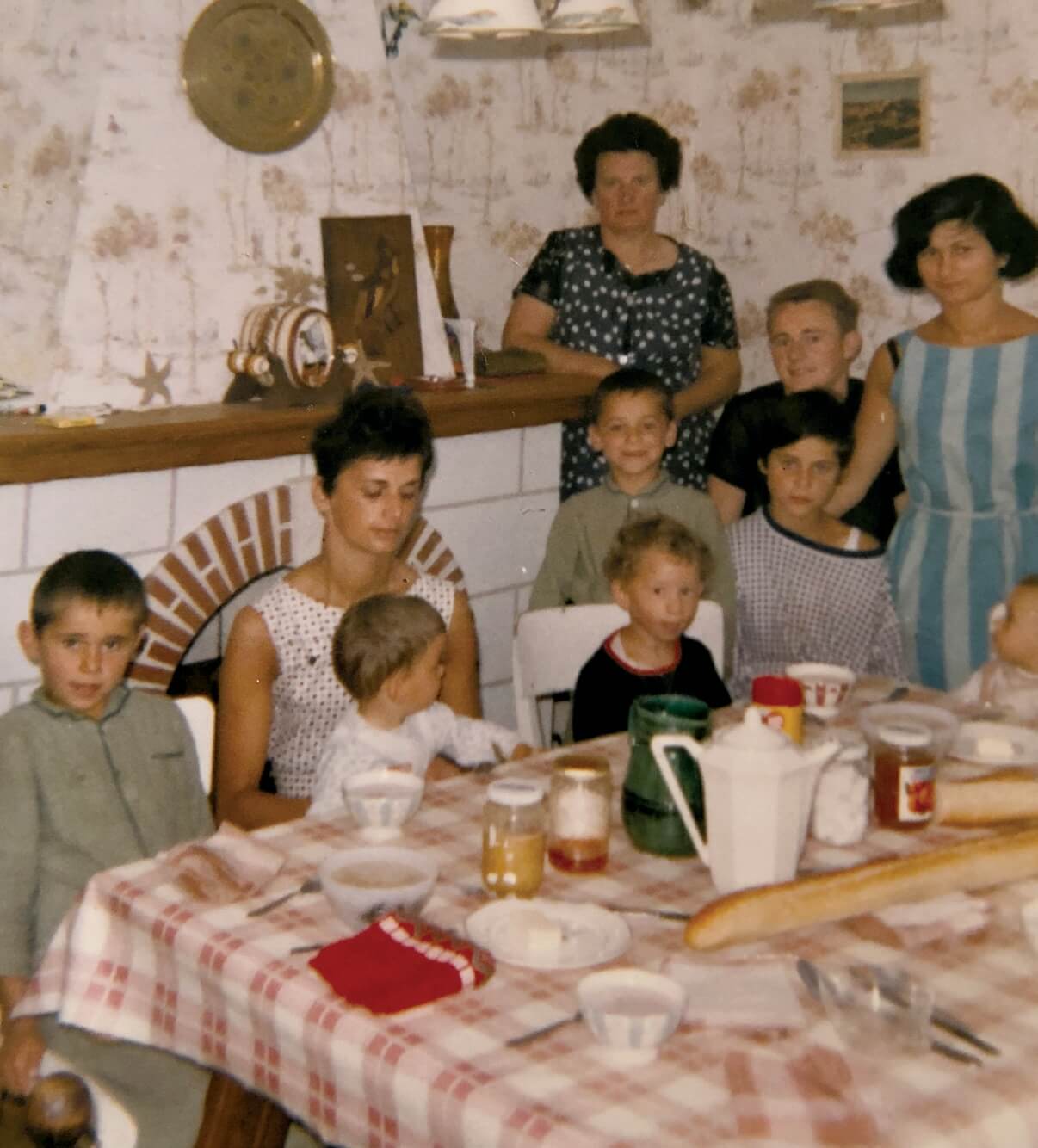
Jean-Georges Vongerichten was born in IlkirchGraffenstaden, a small town outside Strasbourg, in Alsace, France, surrounded by a family full of cooks, except none of them owned a restaurant. Instead, his mom and aunts prepared lunch daily for the dozens of workers at the family-owned fuel company. Though he loved to eat, lunch duty didn’t inspire Vongerichten’s passion for cooking. It happened almost by accident, as the aimless young man became as curious about restaurants as he was eager to avoid entering the family business.
"I always seem to find a way in,” Vongerichten says about his first opportunity to be a chef. “I just did what I wanted. And people began to notice.”
Jean-Georges Vongerichten first earned recognition for his innovative fusion of French and Southeast Asian cuisines as chef at the Mandarin Oriental hotel in Bangkok. He then commanded kitchens in Singapore, Hong Kong, London and Boston, before arriving in midtown Manhattan with a fourstar splash at Lafayette, the former restaurant in the Drake Hotel. JoJo, however, was Vongerichten’s debut as a chef/owner, and the menu boasted dishes unlike any that had earned him honors at his previous kitchen.
That included the first dish I noticed on JoJo’s menu, “Shrimp in carrot juice with Thai chilies.” The host, Lois Freedman (now co-CEO and president of Vongerichten’s empire), insisted we try it. I did. And after two euphoric can-anythingtaste-more-wonderful-than-what-I’m-chewingright-now bites, I abandoned professional protocol, walked into the kitchen holding a halfeaten shrimp and asked the compact, elfinly attractive man in chef whites, “Are you the guy who thought this up? Because this shrimp is so goddamn amazing I need to order another because I have no intention of sharing this one.” I’ve been delighted to be friends with and in awe of Jean-Georges Vongerichten ever since.
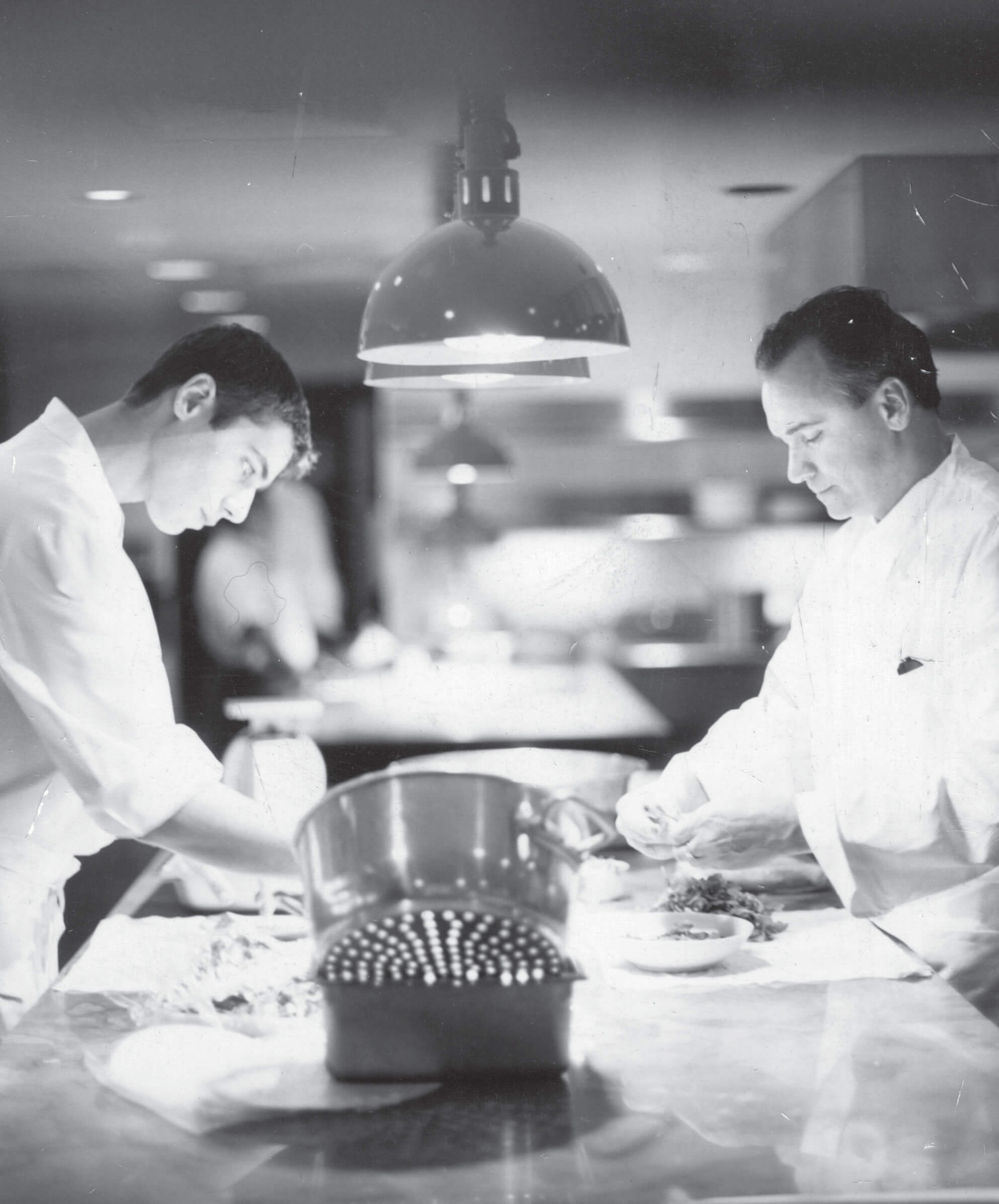
Now an Upper East Side staple, JoJo’s success set off a stunningly swift expansion of J-G in town outposts. But what was uncanny and inexplicably eerie was that during a three-week period in the early 2000s, as restaurant critic for New York magazine, I dined at his Spice Market, Vong, Nougatine, Perry Street and Mercer Kitchen, yet at each location, Vongerichten popped out of that kitchen to say “Hi!” The press just made such a fuss about Tom Brady cloning his dog yet overlook a far more confounding reality: How can this limitlessly gifted chef be everywhere at once? Vongerichten insists he’s the OG with no mutations or doppelgängers, matter-of-factly insisting, “You should know by now—I love to work.”
So relentless is that love, that Vongerichten’s culinary kingdom has expanded globally to include some 60 restaurants, including outposts in Doha, Sao Paolo, Kyoto, Shanghai and St. Barthélemy with plans for even more. And yet, Vongerichten sits serenely at ease opposite me on a strawberry mousse pink banquette a few weeks into the opening of ABC Kitchens, his newest destination on the waterfront in DUMBO, Brooklyn, as if he’d just come in from paddleboarding in St. Barth’s.
Why do you always look so damned content when you’re at work?
I’m never happier than when I’m in one of my restaurants. Being in the kitchen is my career, my hobby and salvation. But I didn’t grow up wanting to be here. I was a lazy, aimless student, with no ambition. One trip to a restaurant changed everything.
What happened?
It was 1973. I was 16. We never went out to eat.My family was big and always together. There were usually 16 sitting down to dinner and everyone cooked, so we never went out to eat. But for one celebration, my father took us to a three-star Michelin restaurant. The food—incredible, but, more importantly, I discovered something I hadn’t expected. I didn’t know being a chef could be a job.
How did you go after it?
Actually, my father went to the chef, whom he knew; described me as a total failure who loved food and needed a job. Dishwashing. Anything. Turns out the chef was looking for someone to do prep. I began work immediately at a thre-estar kitchen and for four months did everything except washing dishes. Then they transferred me to the legendary L’Oasis restaurant in the south of France outside Cannes. And I stayed there for two years, until I met [world-renowned master chef], Paul Bocuse, who hired me. So I went from tomatoes, rosemary and garlic along the Mediterranean to steaming cabbage, slicing potatoes and sautéing frog legs in Lyon.
No cooking school? All on-the-job training?
Never more so than when I was offered to chef at the new Mandarin Oriental hotel in Bangkok. I said no for three months. I hadn’t even been a sous chef. But the owner persisted. Chef Bocuse insisted. So I took the job. I was 22. I didn’t speak English let alone Thai, but something compelled me to take the risk. I was more excited than afraid.
Tell me, how hard a learning curve was it?
It wasn’t. And I think it’s because I’m fearless. I’m not sure why I’m this way. I’m not being arrogant, but I’ve never been afraid of a risk. I always find a way in. And since I was already an outlier in Bangkok, I felt I had nothing to lose. I was so excited at the opportunity to create without restrictions. I just did what I wanted. And people began to notice.
Sitting here with you in Brooklyn’s DUMBO at your latest successful restaurant in New York City begs the question: Just how many places do you have in NYC? 14, with ABC Kitchens Dumbo.
Since I can’t find definitive proof you’ve been cloned, you have got to be tired, my friend. [Laughs] No, I feel, at 68, I’ve just found my rhythm. I’m doing more satisfying things now than I’ve ever done in my life. I run to work in the morning. Actually, I drive but I drive myself. I find cooking and driving both spiritual activities for me. And because I love doing both, I wind up with too many ideas in my head.
Is that the reason why, unlike many of your contemporaries, you rarely open multiple versions of the same restaurants? There are 50 Nobu spots globally.
Nobu is an extraordinary chef, but repetition isn’t for me. I’m too curious about new tastes and smells. More produce is readily available than ever. Fresh scallops arrive overnight from Hokkaido, freshly caught fish in hours from coastal towns. I find six different color carrots at the greenmarkets. Why get locked into a formula? I want each of my places to offer discovery, for me and especially for customers. I like to think they are as adventurous as I am. Also, restaurants need to be aware of their zip code and in touch with their neighborhood. Neighborhoods are rarely identical. You want regulars living within ten blocks of your place. Fifteen years ago, I never would’ve opened a restaurant like abcV in Brooklyn. It didn’t fit. Now, I know it will work.
How have your diners’ tastes changed?
They know all what’s out there, but they want food that’s lighter, fresher, simpler but with more variety, bigger flavors. What they can’t make at home. And they want to be appreciated. You know what can kill a restaurant faster than bad food or an inattentive staff?
Bad lighting?
Yes! It ruins everything! If a space has the ambience of a dentist’s office, I don’t care what the kitchen is serving. I’m going home.
When you’re home, what do you cook?
Breakfast is the only meal I regularly eat at home. I always have yogurt, fruit, chocolate and champagne in the fridge. If I do cook for myself, it’s always something simple like cacio e pepe— oil, pasta, parmesan, pepper. On the rare times I do entertain at home in Waccabuc [northeast of NYC], it’ll be a one pot meal, like Coq au Vin, delivered right to the table.
You travel one week a month to your restaurants. What are the most exciting food cities right now?
Istanbul, Shanghai, Marrakech, México City, Dublin and, of course, New York, London and Paris get better and better, but it’s not necessarily restaurants that excite me. Wherever I land, the first thing I do, sometimes even before unpacking, is head to the local greenmarket. And wherever I am I gravitate toward street food from pushcarts, trucks and vendors. Some of the most inspiring ideas start with something I ate standing up in a market.
When traveling to multiple destinations, how much do you pack?
I haven’t checked luggage in more than 30 years. I pack two pairs of shoes, two pairs of underwear, two socks, two chef’s jackets, one sweater, one white shirt and a blazer either black or white. I use the hotel laundry every day.
Any new restaurant concepts you’re working on?
We just opened Chez Margaux in the old Spice Market space in Manhattan’s Meatpacking District. It’s a private nightclub. I want to revive nightlife to New York. I now feel the city is more vibrant and youthful than ever. Remember when everything was open all night? I want to help bring that back.
Do you ever stop, relax, exhale, sleep?
Yes, yes, yes. [Laughs] I enjoy my life. I have five grandchildren and spend as much time as I can with them. I’m so proud of my son Cedric, who, with his wife, Ochi, now have ten restaurants of their own. [Vongerichten also has two daughters, Louise and Chloe.] As for me, I go to the gym every morning. I ski. In St. Barth’s, which is as close as I get to calling anywhere my happy place, I paddleboard and snorkel, take my shoes off and don’t put them on for three weeks. I disconnect as best as I can except for one habit I cannot give up.
What could possibly be so important?
I never miss a meal.
Ever?
Never! Why deny myself the opportunity to eat more good food? I can’t imagine doing that.